Anna Baumann · 19 November 2026
Exploring Feedback Mechanisms in Directory Quality Refinement Processes
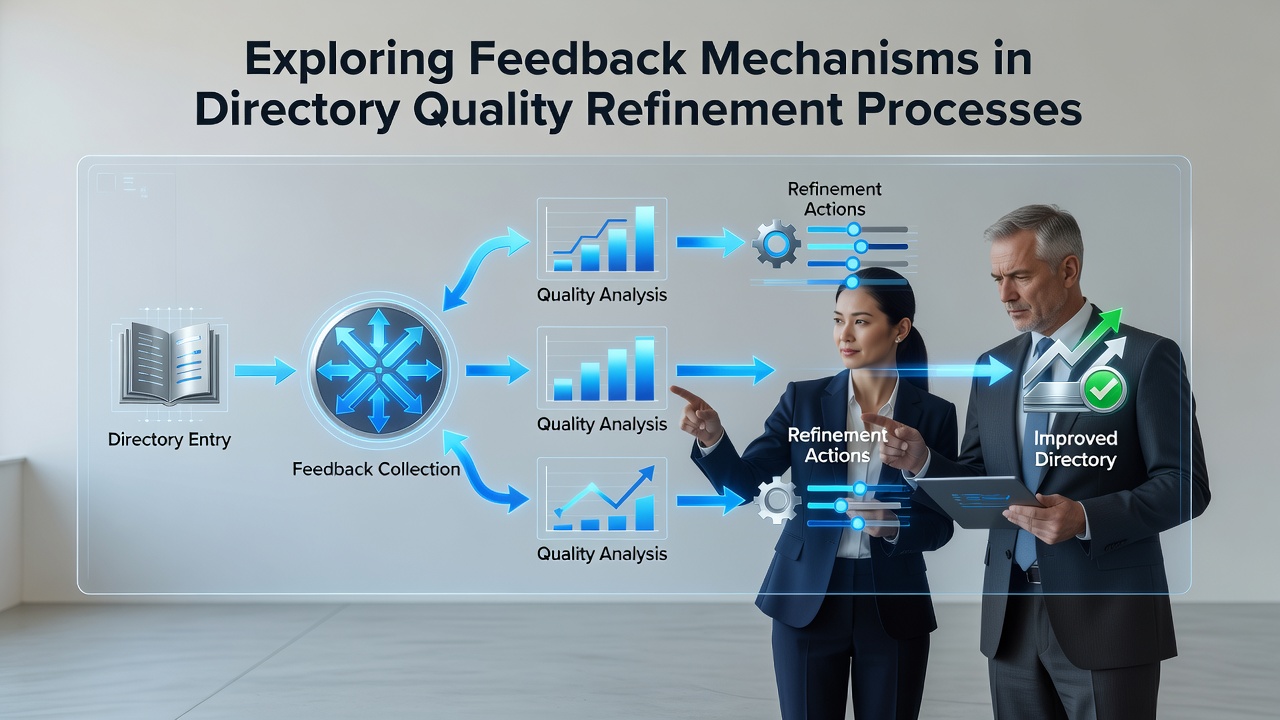
Directory systems across professional and business sectors rely on structured feedback mechanisms to maintain listing accuracy and relevance over time. These processes involve continuous data collection from multiple sources, including user submissions, automated crawlers, and performance metrics that track how entries perform in search results and user interactions. In November 2026, several industry reports highlighted increased adoption of layered feedback protocols as directories expanded to handle growing volumes of submissions from global networks.
Core Components of Feedback Integration
Feedback mechanisms operate through distinct channels that feed into refinement cycles. User-reported errors form one primary input, where inaccuracies in contact details or category assignments trigger review queues managed by moderation teams. Performance data from click-through rates and dwell times provides another layer, allowing algorithms to adjust visibility rankings based on observed engagement patterns. Researchers at various institutions have documented how these inputs combine to create iterative updates, with changes applied in batches rather than real time to reduce system load.
Automated validation tools scan for inconsistencies such as duplicate entries or outdated timestamps, then route flagged items for human oversight. This hybrid approach balances speed with precision, since fully automated systems often miss contextual nuances that moderators catch during manual checks. Data from directory operators shows that incorporating both machine and human review stages reduces error rates by measurable margins over successive refinement rounds.
Case Examples from Operational Systems
One regional business directory implemented a feedback dashboard that aggregates signals from verified users and cross-references them against external databases. When discrepancies appear, the system generates alerts that prompt listing owners to submit updated information within set timeframes. Observers note that this method improved overall data freshness without requiring constant staff intervention. Another platform focused on academic and research listings used citation tracking as a feedback signal, adjusting prominence when new publications referenced listed entities.

Studies conducted by teams at institutions in Canada and Australia have examined similar setups, finding that directories employing multi-source feedback maintained higher consistency scores during periods of rapid content growth. These findings align with patterns reported by the National Institute of Standards and Technology, which tracks quality metrics in information systems across sectors. European research groups have contributed parallel data through projects coordinated by the European Data Portal, emphasizing standardized reporting formats that ease cross-directory comparisons.
Challenges in Scaling Feedback Processes
As directories scale, feedback volume increases and introduces noise that can overwhelm refinement pipelines. Spam submissions and biased ratings require filtering layers, often built from machine learning models trained on historical patterns. Yet these models themselves need periodic recalibration when user behaviors shift, creating secondary feedback loops that demand ongoing maintenance. Operators address this by setting threshold parameters that prioritize high-confidence signals while de-emphasizing outliers until they accumulate sufficient corroboration.
Geographic and regulatory variations add further complexity. Directories serving multiple jurisdictions must align feedback handling with differing data protection requirements, which affects how quickly corrections propagate through systems. In practice, this leads to segmented processing queues that route entries according to origin and compliance category before final integration.
Measurement and Adjustment Techniques
Quality metrics used in these environments include precision rates for category assignments, completeness percentages for required fields, and response times to reported issues. Teams track these indicators across quarterly intervals to identify trends and calibrate weighting factors within feedback algorithms. When metrics show stagnation, operators introduce targeted campaigns that solicit specific types of input, such as verification of recently added listings.
Longitudinal analysis from multiple operators reveals that directories maintaining transparent documentation of their refinement rules tend to receive more constructive feedback from participants. This transparency reduces duplicate reports and helps surface systemic issues earlier in the cycle. The process continues to evolve as new data sources become available, including API integrations with external verification services that supply real-time updates on organizational status changes.
Conclusion
Feedback mechanisms in directory quality refinement represent interconnected systems that draw from user input, performance analytics, and automated checks to sustain accuracy across expanding datasets. Continued development in this area centers on balancing automation scale with human judgment, while adapting to regulatory and technical shifts observed through 2026.