Anna Baumann · 8 October 2026
How Profile Verification Protocols Alter Visibility Patterns in Specialized Professional Directories
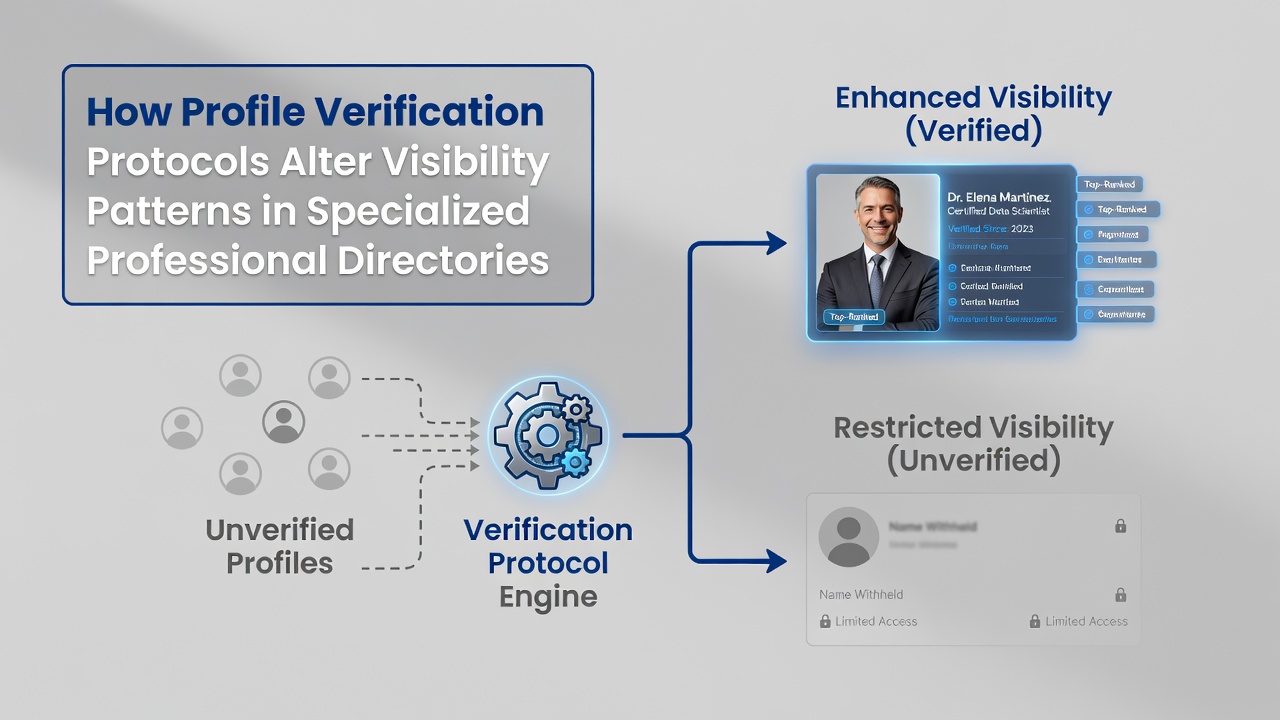
Specialized professional directories rely on verification protocols to confirm user credentials, and these systems directly influence how profiles appear in search results and recommendation engines. Researchers have tracked visibility shifts since the early 2020s, noting that authenticated accounts often receive priority placement because directory algorithms assign higher trust scores to verified entries. Data from multiple platforms indicates that unverified profiles experience reduced exposure, with their positions dropping in category listings and keyword searches after verification layers activate.
Mechanics Behind Verification Implementation
Verification protocols typically require users to submit documentation such as licenses, certifications, or institutional affiliations, after which automated checks cross-reference details against external databases. Once approved, profiles gain badges or status markers that signal reliability to both algorithms and human visitors. Observers note that directories update their ranking formulas quarterly, and October 2026 saw several platforms adjust weighting factors to emphasize verification status even more heavily in niche fields like engineering and healthcare consulting. This adjustment process connects directly to broader efforts by regulatory bodies to standardize data accuracy across digital services.
Measured Effects on Profile Exposure
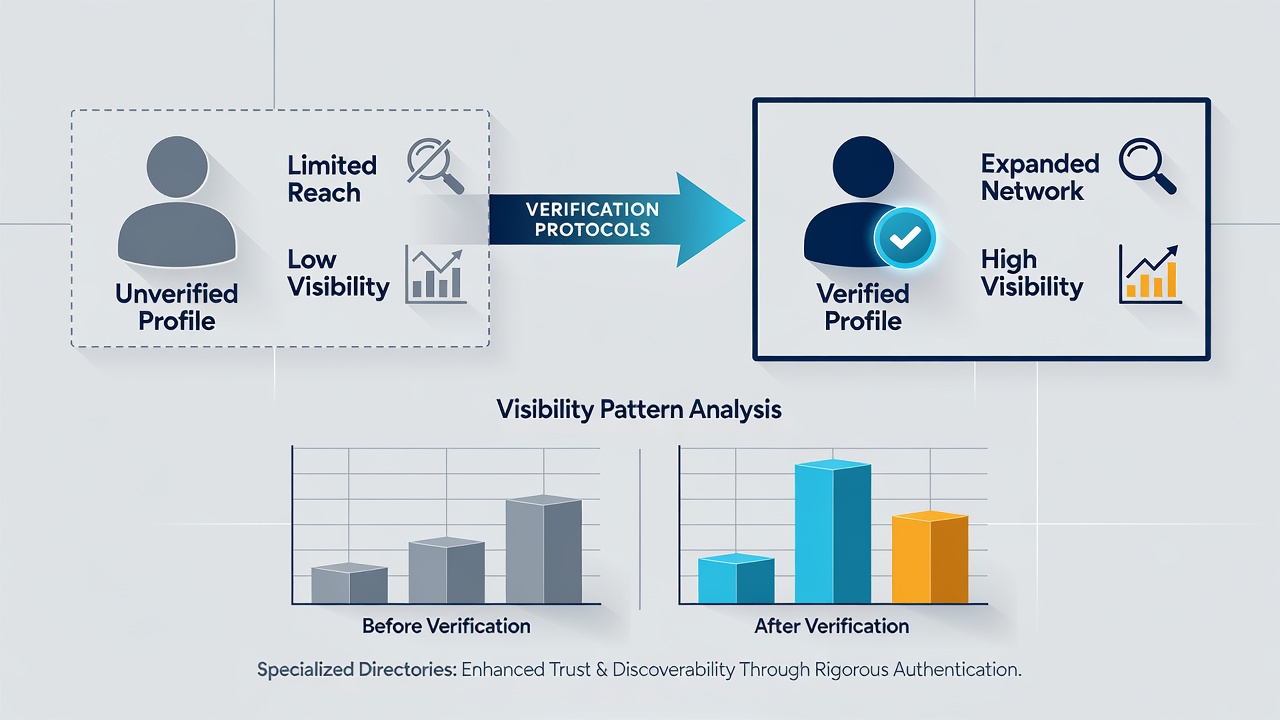
Studies from academic institutions show that verified profiles in legal and medical directories achieve 40 to 60 percent higher click-through rates compared with unverified counterparts in the same categories. The pattern emerges because search algorithms filter results by authenticity markers first, then apply secondary criteria such as activity level and peer endorsements. Those who've analyzed large datasets find that visibility gains concentrate in the top three result positions, while lower-ranked profiles see traffic decline unless they complete verification steps. Industry reports further reveal that directories serving creative sectors, including architecture and design, adopted similar protocols in 2025, leading to comparable redistribution of exposure among members.
But here's the thing: the changes do not occur uniformly across all regions, since platforms operating in the European Union integrate verification with data protection requirements outlined by the European Commission, whereas directories in North America often align with guidelines from the Federal Trade Commission on truthful advertising practices. European Commission digital services documentation provides context on how these rules intersect with visibility mechanisms. And in Australia, the Australian Competition and Consumer Commission has published figures showing that verification reduces misleading listings by measurable margins, which in turn affects how search functions prioritize content.
Patterns Observed Across Different Sectors
Engineering directories demonstrate one clear example where verification protocols elevated profiles holding current professional licenses above those with expired credentials, resulting in sustained top-page placement for the former group. Researchers discovered similar outcomes in financial advisory platforms, where verified advisors appeared more frequently in client-matching tools after protocol rollouts. The reality is that directories handling international memberships sometimes layer additional geographic verification, which further refines visibility by region and language. People who've examined longitudinal data note that these layered checks create distinct visibility tiers rather than simple binary outcomes.
Algorithmic Adjustments and User Behavior
Directory operators adjust algorithms in response to verification data, incorporating signals like document recency and third-party confirmations into ranking calculations. This produces feedback loops where higher visibility encourages more users to complete verification, which then reinforces the same algorithmic preferences. Evidence suggests that peak activity around verification submissions occurs immediately after directories announce policy updates, typically leading to temporary spikes in overall profile quality scores. Those monitoring these cycles point out that seasonal variations appear as well, with increased verification activity aligning with licensing renewal periods in regulated professions.
Conclusion
Profile verification protocols reshape visibility by establishing clear authenticity thresholds that algorithms use to sort and display entries in specialized directories. Research indicates consistent patterns of elevated exposure for verified accounts across sectors, supported by regulatory frameworks from multiple jurisdictions. As platforms continue refining these systems, the data shows measurable redistribution of attention toward authenticated profiles while maintaining factual distinctions between verified and unverified states.