Anna Baumann · 24 September 2026
Tracing the Evolution of Content Prioritization Mechanisms in Response to Platform Growth Spurts
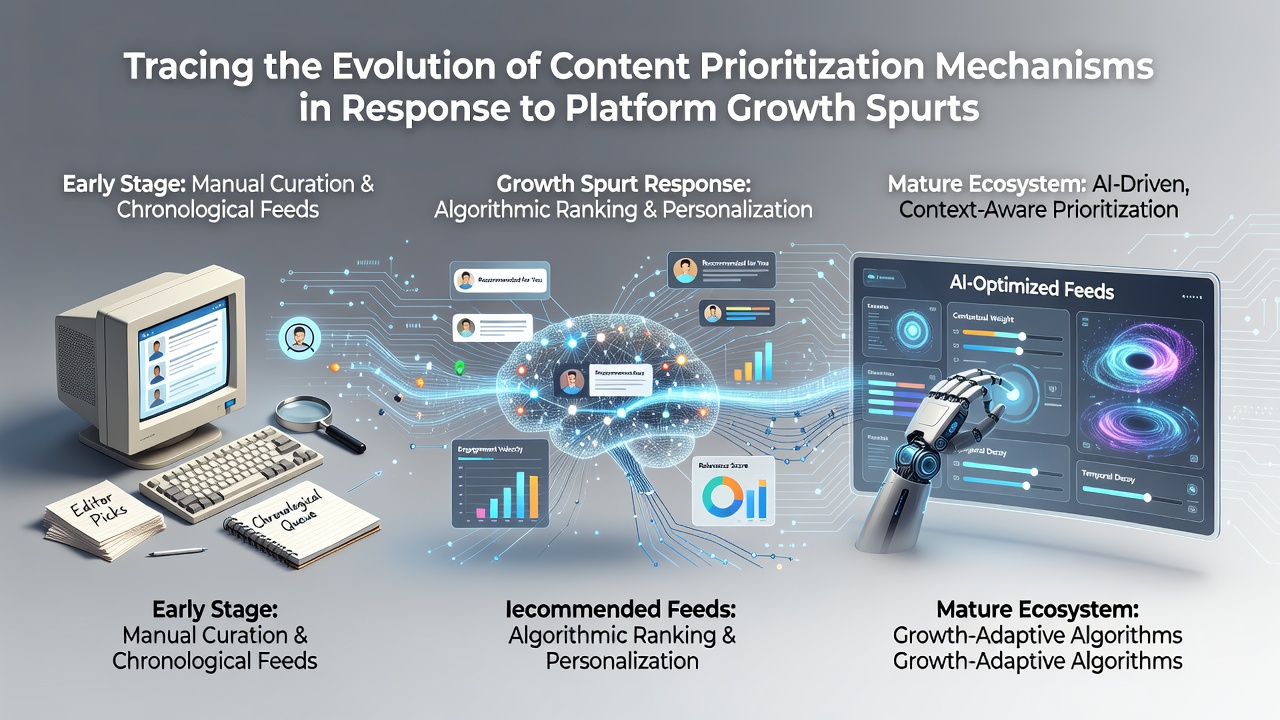
Content prioritization mechanisms on digital platforms have shifted dramatically alongside rapid user growth, moving from simple chronological feeds and basic keyword matching to layered systems that incorporate engagement signals, machine learning models, and real-time personalization layers. Early platforms relied on straightforward rules such as recency or connection counts, yet these approaches quickly encountered limits when daily active users scaled from thousands to millions within short periods.
Initial Frameworks and Early Limitations
Observers note that the first major platforms employed basic sorting methods where content appeared in reverse chronological order or according to direct connections, a setup that worked adequately for small communities but struggled once network effects accelerated. Researchers at academic institutions documented how these systems failed to filter noise effectively during growth phases, leading developers to introduce weighted factors like click-through rates and dwell time as interim solutions. Data from industry reports indicate that platforms experiencing user surges between 2004 and 2008 began layering additional signals to maintain relevance without overwhelming server resources.
Introduction of Graph-Based and Engagement-Driven Models
Platform teams responded to growth spurts by adopting graph-based algorithms that mapped user relationships and content interactions more comprehensively. One study revealed that early versions of these models prioritized direct connections while gradually incorporating indirect signals such as shared interests or group affiliations. What's interesting is how these changes coincided with infrastructure upgrades that allowed processing of larger datasets, turning what had been simple lists into dynamic rankings updated multiple times per day. External analyses from regulatory bodies like the Australian Competition and Consumer Commission highlight similar patterns across multiple services where engagement metrics became central once monthly users crossed critical thresholds.
Expansion Through Machine Learning and Personalization
As user bases continued expanding into the hundreds of millions, platforms integrated machine learning systems capable of processing hundreds of variables simultaneously. These models learned from aggregated behavior patterns rather than fixed rules, enabling finer adjustments during periods of rapid onboarding. Figures from research papers show that recommendation accuracy improved measurably after such implementations, although initial rollouts required extensive testing to avoid feedback loops that amplified popular content at the expense of newer material. And the transition did not stop there; teams added diversity constraints and freshness boosters to counteract homogenization effects that emerged during sustained growth periods.
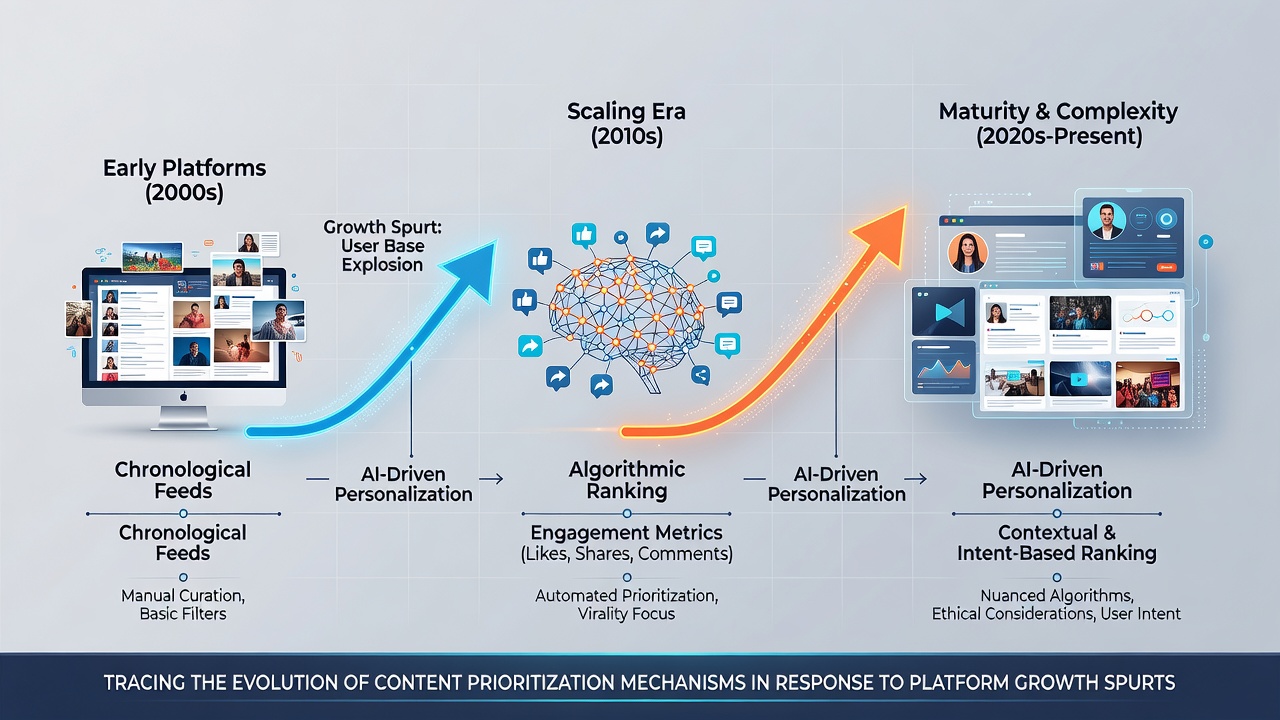
By the mid-2010s, several platforms had deployed multi-stage ranking pipelines where an initial retrieval phase narrowed candidates before a scoring phase applied learned weights. This architecture proved scalable during subsequent growth waves, allowing systems to handle billions of daily impressions while incorporating contextual data such as device type, time of day, and session history. Observers point out that European Commission studies on digital markets noted parallel developments across services, with prioritization logic becoming increasingly opaque to outside analysts as model complexity rose.
Adaptations to Scale and External Pressures
Growth spurts also prompted integration of safety and policy layers that operated alongside core ranking functions. Platforms began running parallel classifiers for spam detection, misinformation flags, and compliance checks before final delivery decisions, a practice that became standard once regulatory scrutiny intensified. Data indicates that these additions required dedicated compute resources yet preserved overall system responsiveness through optimized indexing techniques. In September 2026, updates to transparency reporting requirements in multiple jurisdictions are expected to document further refinements in how platforms balance engagement goals against emerging content standards during continued expansion phases.
Academic work from institutions studying network dynamics demonstrates that prioritization mechanisms often undergo recalibration cycles every 12 to 18 months when user metrics double or triple within short windows. These recalibrations typically involve expanding feature sets to include session-level patterns and cross-platform signals where available. The reality is that such iterative changes reflect engineering responses to measurable load increases rather than speculative redesigns.
Conclusion
Platform content prioritization has progressed through distinct stages tied directly to measurable growth events, incorporating graph analysis, engagement modeling, machine learning pipelines, and policy overlays in succession. Each phase addressed specific bottlenecks that arose once user volumes exceeded previous design assumptions, resulting in systems that now process diverse signals at scale. Continued documentation from sources such as the OECD digital economy reports shows these mechanisms remain under active development as platforms encounter new growth thresholds and regulatory environments.